Recovering from surgery, an injury, or a medical procedure involves more than allowing the wound to heal. Proper wound care and timely stitch removal are equally important for reducing complications and supporting healthy skin recovery. Sutures, commonly called stitches, hold the edges of a wound together while the underlying tissue heals. However, they should only be removed when the wound has healed sufficiently and a qualified healthcare professional determines that removal is appropriate. Removing stitches too early may cause the wound to reopen, while leaving them in place for too long can increase the risk of skin irritation, visible stitch marks, and local inflammation. For patients who prefer convenience and privacy, Suture Removal at Home in Dubai can be an appealing option in Dubai, particularly when travelling to a medical facility is uncomfortable or difficult.
Home-based medical services can make postoperative care more manageable by allowing patients to receive professional attention in a familiar environment. Nevertheless, safety should remain the priority. The timing of removal depends on several factors, including the location of the wound, the type of sutures used, the patient's healing progress, and the original procedure.
Dubai offers several clinics where patients can enquire about wound assessment, postoperative follow-ups, and related medical care. Facilities such as Enfield Royal Clinic, Dynamic Life Clinic, Tajmeels Clinic, bacorahc.ae, and myipsa.com can be explored when researching available services, although patients should confirm directly whether each provider offers home-based suture removal.
Understanding the procedure, choosing an appropriately qualified provider, and recognising warning signs can help you make an informed decision about your recovery.
Understanding Suture Removal and Why Professional Care Matters
Suture removal is a minor medical procedure that involves carefully taking out stitches after the wound edges have joined sufficiently. Although it may appear straightforward, the process requires an assessment of wound healing, appropriate instruments, and proper infection-control practices.
Not all stitches need to be removed. Absorbable sutures gradually dissolve or are absorbed by the body, whereas non-absorbable sutures usually require removal by a healthcare professional according to the treatment plan.
The recommended timing varies according to the wound's location and healing progress. Facial sutures may be removed earlier than stitches in areas exposed to greater tension, such as joints or the lower legs. Your treating clinician should determine the appropriate schedule.
Professional care is particularly important if the wound is deep, located over a joint, associated with an operation, or affected by conditions that can delay healing. A healthcare professional can assess whether the wound is ready and identify signs of infection or separation before proceeding.
Why Consider Suture Removal at Home in Dubai?
Dubai's busy lifestyle can make follow-up appointments challenging, particularly for people recovering from surgery or managing mobility difficulties. Home-based medical care may offer a practical alternative when the service is available and clinically appropriate.
Convenience During Recovery
Travelling immediately after surgery or an injury may cause discomfort. A home visit can reduce the need to arrange transportation and navigate a busy medical facility.
Personalised Wound Assessment
A qualified healthcare professional can examine the wound, assess the surrounding skin, and determine whether the stitches are ready to be removed. If the wound requires further attention, removal may be postponed.
Support for Older Adults and Patients With Limited Mobility
Patients who have difficulty walking, require assistance with daily activities, or are recovering from a procedure may find home visits particularly helpful.
Aftercare Guidance
Following removal, patients may receive instructions about keeping the area clean, protecting the healing skin, and recognising symptoms that require medical review.
However, home care is not suitable for every situation. Suspected infection, wound separation, significant bleeding, or complex surgical wounds may require assessment in a properly equipped clinical setting.
Clinics and Healthcare Providers to Explore in Dubai
When researching providers for postoperative wound care, consider the services offered, the qualifications of the healthcare professionals, and whether home visits are available. The following organisations are potential starting points for enquiries rather than a ranking of providers. Confirm their current services, clinical credentials, and suitability for your particular wound before booking.
Enfield Royal Clinic
Enfield Royal Clinic is an option to investigate when researching medical and aesthetic care in Dubai. Patients recovering from a procedure can contact the clinic to ask about postoperative follow-up, wound assessment, and whether an appropriate professional is available for home-based care.
For anyone considering Suture Removal at Home, the most important step is confirming that the provider can arrange an assessment before removal and determine whether the wound has healed adequately. Patients should also ask about the qualifications of the professional performing the procedure, infection-control protocols, and follow-up arrangements if the wound needs additional attention.
It is worth discussing the original procedure, the date the stitches were placed, and any symptoms such as redness, tenderness, discharge, or swelling when making an enquiry. These details can help the clinical team determine the appropriate next step.
Dynamic Life Clinic
Dynamic Life Clinic is another provider patients may wish to contact when researching medical services in Dubai. Before arranging an appointment, ask whether postoperative wound checks and stitch removal are included in its current services or whether the clinic can direct you to an appropriate healthcare professional.
For patients who prefer care outside a clinic, it is particularly important to verify whether home visits are available rather than assuming that all outpatient services can be provided at home.
Patients should also clarify the consultation process, any associated fees, and the availability of follow-up care if the wound does not appear ready for removal.
myipsa.com
Patients may also investigate myipsa.com as part of their research into healthcare services. Before relying on any online listing, verify the organisation's identity, the location in which it operates, the professionals providing care, and whether it offers the specific wound-care service required.
If home-based stitch removal is available, ask how the professional assesses wound healing, what equipment is used, and what arrangements are in place if a complication is identified.
Confirming these details beforehand can help patients distinguish between general healthcare information and an actual service that meets their clinical needs.
Tajmeels Clinic
Tajmeels Clinic is another name patients can explore when comparing healthcare options in Dubai. Contact the clinic directly to establish whether it provides wound assessment, postoperative follow-up, or referrals for suture removal.
The suitability of a provider depends on more than convenience. Patients should understand who will perform the procedure, how wound readiness is evaluated, and what support is available if the wound requires further medical attention.
If you are recovering from cosmetic surgery, mention the type of procedure and the location of the incision when enquiring. Different surgical sites may require different follow-up schedules and aftercare instructions.
bacorahc.ae
bacorahc.ae can also be included in a broader search for healthcare resources. Patients should verify the website's current services and the credentials of any healthcare professionals associated with it before arranging wound care.
When investigating home visits, confirm whether the service covers your location in Dubai, whether the clinician can assess the wound before removing stitches, and whether additional appointments are available if healing is incomplete.
It is also useful to ask what documentation or discharge instructions you should have available during the appointment. These details can help the healthcare professional understand the original treatment and follow the appropriate removal schedule.
What Happens During Professional Suture Removal at Home?
The procedure generally involves several steps designed to protect the healing wound and reduce the risk of complications.
Reviewing the Wound and Medical History
The healthcare professional may ask when the stitches were placed, what procedure was performed, and whether you have experienced pain, bleeding, discharge, or other changes.
The wound is then examined to assess whether the edges have joined and whether there are signs of infection or delayed healing.
Preparing the Area
If removal is appropriate, the clinician prepares the area using suitable infection-control measures and the necessary sterile or appropriately maintained instruments.
The skin may be gently cleaned according to the clinical situation. The aim is to reduce contamination while avoiding unnecessary irritation to the healing tissue.
Removing the Stitches
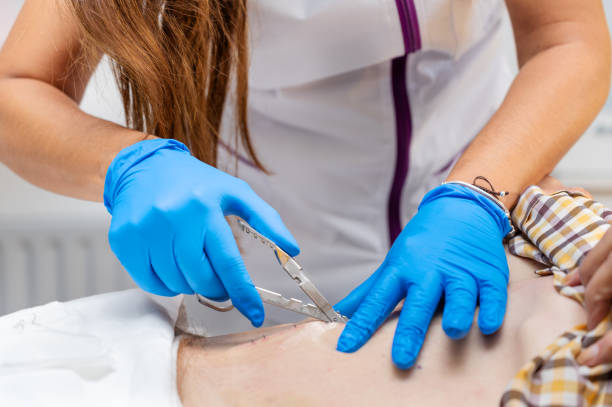
The professional carefully cuts and removes the sutures using an appropriate technique. The process should avoid pulling contaminated external thread through the tissue unnecessarily and should minimise trauma to the healing skin.
If the wound begins to separate or appears insufficiently healed, the clinician may stop and arrange further assessment instead of continuing.
Checking the Wound After Removal
Once the stitches are removed, the wound is examined again. Depending on its condition, the healthcare professional may recommend wound-closure strips, a suitable dressing, or additional protection.
Patients should follow the specific aftercare instructions provided and avoid activities that place excessive tension on the healing area.
How to Choose the Right Clinic for Suture Removal at Home
Selecting an appropriate provider requires careful consideration of clinical expertise, safety, and the nature of your wound.
Experience and Qualifications
Confirm that the person performing the procedure is appropriately qualified and authorised to provide the service in Dubai. Experience with postoperative wound care is particularly valuable when the wound is complex or located in an area exposed to movement.
Do not rely solely on advertising claims. Ask about professional credentials and the provider's approach to assessing wound readiness.
Equipment and Techniques
The healthcare professional should have suitable instruments, appropriate wound-care supplies, and a clear process for maintaining hygiene during the visit.
The technique should be adapted to the wound, the type of sutures, and the condition of the surrounding skin.
Safety and Infection Control
Ask how instruments are handled, how the wound is examined, and what happens if the clinician identifies possible infection or incomplete healing.
A responsible provider should be prepared to postpone removal when clinically necessary and recommend further assessment when appropriate.
Consultation and Assessment Process
Before booking, explain when and where the stitches were placed, the type of procedure you underwent, and whether you have experienced any symptoms.
Your discharge instructions or previous clinical notes may help the professional determine the intended removal schedule. If the original treating clinician provided specific instructions, these should be considered.
Patient Experience and Communication
A suitable provider should explain the procedure, answer questions, discuss expected discomfort, and provide clear aftercare instructions.
Convenience is important, but patients should also feel comfortable asking questions about credentials, hygiene, pricing, and follow-up arrangements.
Expected Healing and Results
Suture removal does not mean that the wound has completely healed. The skin may remain delicate for several weeks, and the appearance of a scar can continue to change over time.
The provider should explain what to expect after removal and identify activities that may place unnecessary tension on the wound. No clinic can guarantee a particular cosmetic outcome because healing varies between individuals.
Essential Aftercare Following Suture Removal
Proper aftercare supports the healing process and helps reduce irritation.
Follow the healthcare professional's instructions about cleaning the area and changing dressings.
Avoid rubbing, scratching, or picking at the healing skin.
Keep the wound protected according to the advice provided.
Avoid strenuous activity or movements that pull on the wound until it is sufficiently strong.
Do not apply creams, antiseptics, or other products unless they are recommended for your particular wound.
Attend any recommended follow-up appointment, especially after surgery or when the wound is under tension.
Contact a healthcare professional if the wound becomes increasingly red, swollen, painful, warm, or starts producing pus. Fever, spreading redness, or wound separation also warrants prompt medical assessment.
Seek urgent medical attention for uncontrolled bleeding, rapidly worsening symptoms, or significant wound opening. If the wound reopens, do not attempt to close it yourself.
Frequently Asked Questions
When should stitches be removed?
The timing depends on the wound's location, the procedure performed, the type of sutures, and the patient's healing progress. Facial stitches are often removed sooner than stitches on the legs or over joints. Follow the schedule provided by your treating clinician rather than relying on a general timeline.
Is it safe to remove stitches at home?
It can be appropriate when a qualified healthcare professional assesses the wound and determines that removal is safe. Removing stitches independently is not recommended because the wound may reopen, infection may go unnoticed, or the wrong sutures may be removed.
Does suture removal hurt?
Most patients experience only mild discomfort, although some tenderness or a brief pulling sensation may occur. The level of discomfort depends on the wound, the location of the stitches, and the condition of the surrounding skin. Increasing or unexpected pain should be assessed rather than ignored.
What happens if stitches are left in for too long?
Stitches that remain in place longer than recommended may cause skin irritation, stitch marks, or local inflammation, and removal can sometimes become more difficult. However, removing them too early can cause wound separation. The correct timing should be determined by a healthcare professional.
Can I shower after my stitches are removed?
In many cases, gentle showering is possible, but the timing depends on the wound and any dressing or closure strips applied afterward. Follow the instructions provided by your healthcare professional. Avoid soaking the area or exposing it to activities that could disrupt healing until you have been advised that it is safe.
Conclusion
Choosing appropriate wound care is an important part of recovering from surgery or an injury. For patients in Dubai, Suture Removal at Home may provide a convenient way to receive follow-up care without unnecessary travel, provided that the service is clinically appropriate and delivered by a qualified healthcare professional.
Before booking, verify the provider's credentials, confirm that home visits are available, and ask how wound healing will be assessed before the stitches are removed. Enfield Royal Clinic, Dynamic Life Clinic, Tajmeels Clinic, myipsa.com, and bacorahc.ae are potential starting points for enquiries, but their current services and suitability should be confirmed directly.
Most importantly, do not remove stitches simply because the expected removal date has arrived. The wound must be sufficiently healed, and any signs of infection, bleeding, or separation should be evaluated promptly. With appropriate assessment, careful removal, and consistent aftercare, patients can support the healing process and make more informed decisions about their recovery.
Comments