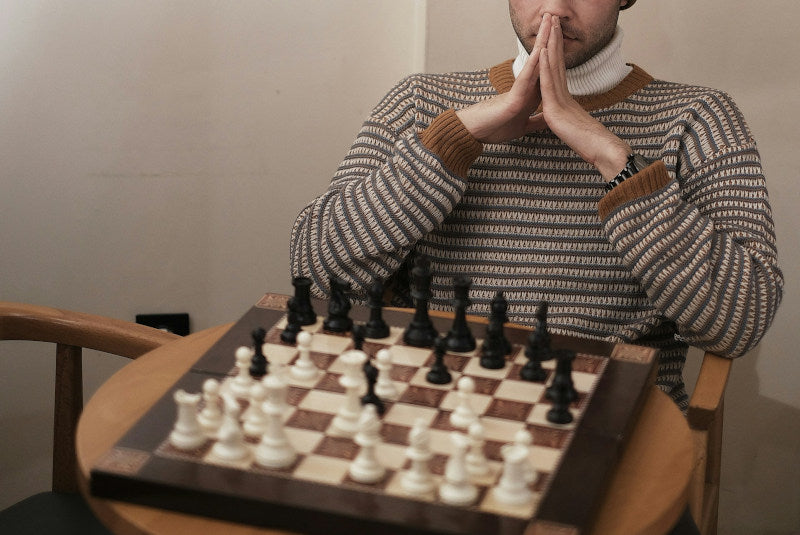
Most chess games are not decided in the opening. They are not decided in the endgame either. The middlegame — that messy, complex stretch between the last opening move and the first endgame conversion — is where the real battle happens. It is where advantages are built, where mistakes are punished, and where the player with better practical tricks tends to come out on top.
Everyone talks about openings. You will find entire libraries dedicated to the Queen's Gambit opening, the Sicilian, the French, and dozens of other first-move systems. Endgame technique has its own extensive literature. But the middlegame sits in an awkward middle ground — too specific for general principles to cover cleanly, too broad for pure memorization to help much. That is exactly why the right set of tricks and concepts makes such a difference here.
This article covers the most effective chess tricks for dominating the middlegame — tactics, strategic ideas, and habits of thinking that actually change the way you play. Whether you are just building your fundamentals or working to push past a rating plateau, these are the concepts that show up again and again in winning games.
Why Does the Middlegame Trip Up So Many Players?
The opening has structure. You follow development principles, castle early, control the center — the path is relatively clear. The endgame has technique. You push passed pawns, activate your king, apply known theoretical patterns. But the middlegame? The middlegame is where you are on your own.
There is no script. The position demands that you read the board accurately, calculate concrete variations, and make judgments under time pressure. Many players who have studied chess tips and tricks for the opening and endgame find themselves drifting in the middlegame, making moves that feel reasonable but lack a clear plan.
The good news is that the middlegame is not random. There are patterns, and once you recognize them, the fog starts to clear.
What Is the Single Most Important Habit in the Middlegame?
Always Ask What Your Opponent Is Threatening
Before every move — without exception — ask yourself what your opponent just did and why. This sounds almost embarrassingly simple, but the number of games lost at every level because a player ignored a direct threat and continued with their own plan is staggering.
This habit alone is one of the most powerful chess tips and tricks you can build into your routine. It does not require calculation talent or deep positional understanding. It requires discipline. Most blunders are not calculation errors — they are attention failures. The player was so focused on their own idea that they stopped watching what was happening on the other side of the board.
Make it automatic. After your opponent moves, stop. Look at the move. Ask: what does this threaten? Only then decide on your response.
How Do You Build a Winning Attack in the Middlegame?
The Principle of the Weak King
If your opponent's king has not castled, or has castled into a compromised position, the middlegame becomes about one thing: getting pieces to the kingside as fast as possible before the position closes or the king escapes.
This is not just about brute force. A successful attack follows a sequence:
- Open lines toward the king — use pawn breaks to tear open files or diagonals pointing at the king
- Bring pieces into the attack — every piece that is not participating is a wasted resource
- Prevent the king from escaping — cut off the flight squares before you deliver the decisive blow
Beginners often launch attacks prematurely, with only two or three pieces involved. The result is that the attack runs out of steam and the attacker is left overextended. The trick is patience — build the attack methodically before committing.
Signs that an attack is ready to launch:
- You have more pieces aimed at the king's zone than your opponent has defenders
- The files or diagonals pointing at the king are open or can be forced open
- Your opponent's pieces are poorly coordinated or tied down on the other side of the board
Piece Activity Beats Material in the Middlegame
One of the most counterintuitive ideas in chess — and one that chess tactics for beginners almost never covers — is that activity often matters more than material. A player with a rook and bishop that dominate open files and long diagonals will frequently outplay a player who is up a pawn but has passive, uncoordinated pieces.
This is particularly relevant when deciding whether to accept a sacrifice. If your opponent offers a pawn to activate their pieces dramatically, think carefully before grabbing it. The material is real, but so is the cost in time and piece coordination.
The knight in chess is especially important to understand in this context. Knights look limited because they move in that unusual L-shape pattern, but in closed and semi-closed middlegames they can become the most powerful piece on the board. A knight planted on a strong central square — particularly one that cannot be easily attacked by enemy pawns — is called an outpost, and it is one of the most durable advantages you can build in the middlegame.
Which Tactical Patterns Win the Most Middlegame Games?
The Fork — Double Attack in One Move
A fork is a single move that attacks two or more enemy pieces simultaneously. The opponent can only respond to one of them, which means you win material. Knights are particularly dangerous fork pieces because their movement is so unpredictable and covers squares that other pieces cannot easily control.
When scanning for tactics in the middlegame, always look for fork possibilities — especially knight forks targeting the king and queen simultaneously. This is one of the most common ways games end at the club level.
The Pin — Freezing a Piece in Place
A pin occurs when a piece cannot move without exposing a more valuable piece behind it to capture. A bishop pinning a knight against the king is one of the most classic middlegame weapons. Once a piece is pinned, you can pile pressure onto it — bringing more attackers than defenders — until it falls.
Understanding pins is foundational for chess tactics for beginners. If you see a pin, ask immediately: can I increase the pressure on the pinned piece before my opponent can break the pin?
The Skewer — The Reverse Pin
A skewer works the opposite way. You attack a valuable piece, it is forced to move, and you capture the less valuable piece behind it. Skewers tend to appear in the endgame but can occur in the middlegame too, especially when queens and rooks are active on open files.
The Discovered Attack — The Hidden Weapon
A discovered attack happens when you move one piece and reveal an attack from a piece behind it. The moved piece can also create a threat of its own simultaneously, making this one of the hardest tactics to see and defend against.
If you study chess piece names and their movement patterns carefully, discovered attacks start becoming visible much faster — because you develop the habit of seeing the whole board rather than just the piece you are moving.
How Do Positional Tricks Decide Middlegame Outcomes?
Controlling the Open File
When a file has no pawns blocking it, rooks become dramatically more powerful. The player who controls an open file with a rook — or better, doubles rooks on it — gains a lasting positional advantage. The rook can penetrate into the seventh rank, threatening the enemy pawns and restricting the king.
In the middlegame, actively seek to open files toward your rooks rather than waiting for them to appear. Pawn exchanges that open lines for your rooks are almost always worthwhile.
The Outpost — A Castle in the Center
An outpost is a square in the opponent's territory that your piece can occupy safely — typically because it cannot be attacked by enemy pawns. A knight on e5 or d5 in the middlegame, firmly supported and impossible to dislodge, is a positional weapon that generates pressure throughout the game.
Building an outpost is one of the most reliable positional tricks in chess. It does not win material immediately, but it slowly suffocates the opponent's position by restricting their piece activity and controlling key squares.
Pawn Structure Weaknesses — The Target You Create
Every pawn move creates a permanent change. Doubled pawns, isolated pawns, and backward pawns are structural weaknesses that persist for the rest of the game. In the middlegame, one of the most effective tricks is to use tactics or exchanges to force your opponent to create pawn weaknesses — and then methodically target those weaknesses with your pieces.
This is where understanding what is elo in chess becomes indirectly relevant. Players with higher ratings do not necessarily calculate deeper on every move — they understand structural weaknesses instinctively and build their plans around exploiting them. Developing this habit is one of the clearest ways to push your rating upward.
Are There Middlegame Tricks Specifically for Beginners?
The Two-Move Trap Mentality
Many beginners play one move at a time, reacting to whatever just happened without a forward plan. A simple but powerful shift is to start thinking in two-move sequences — what do I want to do now, and what do I want to do on the following move assuming my opponent responds normally?
This is not deep calculation. It is just building the habit of thinking slightly ahead rather than purely reactively. Even looking two moves forward catches a large number of the tactical mistakes that cost points at the beginner level.
Avoid Moving the Same Piece Twice in the Opening
This is classic opening advice but it spills directly into middlegame quality. If you move a piece twice in the opening to chase a pawn or respond to a minor threat, you arrive in the middlegame a tempo behind. That tempo deficit means your opponent gets to start attacking before you are ready. The Fool's Mate — the fastest possible checkmate in chess — is the extreme example of what happens when a player spends moves on the wrong priorities and leaves their king's diagonal fatally exposed.
The lesson carries into the middlegame: every tempo you waste gives your opponent a free move to build their position. Efficiency of development translates directly into middlegame power.
Trade Your Bad Pieces
A bad piece is one that is blocked by your own pawns, pointing at nothing, doing no work. In the middlegame, look for opportunities to trade your worst-placed piece for one of your opponent's better-placed pieces. This exchange, even if material is level, often dramatically improves the quality of your position.
This is one of the most underused ideas in practical chess. Players focus on trading to win material, but trading to improve piece quality is often more valuable.
What Separates Good Middlegame Players From Great Ones?
The Ability to Change Plans
A plan in chess is not a fixed script. It is a response to the position at hand. Great middlegame players hold their plans loosely — they commit enough to execute but remain ready to abandon an idea the moment the position demands something else.
This is actually quite hard psychologically. If you have spent five moves building an attack on the kingside, switching to a queenside plan feels like admitting failure. But sometimes the position demands it, and the player who recognizes this — and adapts — will outplay the player who stubbornly continues regardless of what the board is saying.
Calculating Checks and Captures First
When calculating tactics in the middlegame, always start with checks and captures before looking at quieter moves. Checks force the opponent's king to move, which limits their options. Captures change the material balance immediately. These forcing moves are where the majority of tactical opportunities appear, and training yourself to scan for them systematically is one of the most direct improvements you can make to your practical play.
Knowing When to Simplify
Winning a middlegame advantage does not always mean continuing to attack. Sometimes the strongest move is to trade pieces, simplify the position, and convert a smaller but certain advantage into an endgame win. Players who understand when to simplify — and do so decisively — avoid the risk of overcomplicating a winning position and giving the opponent back into the game.
A Practical Checklist for Every Middlegame Move
Before you place your piece, run through this sequence:
- What did my opponent just threaten? — deal with genuine threats before executing your own plan
- Is my king safe? — a king on an open file or uncastled king is always a liability
- Which of my pieces is doing the least work? — find it and improve it
- Are there any tactical opportunities? — scan for forks, pins, skewers, and discovered attacks
- Does this move advance my plan? — if not, reconsider
These five questions will not guarantee a winning middlegame every time, but they will eliminate the most common categories of mistake. Most games at the club level are not won by brilliant ideas — they are won by the player who makes fewer serious errors. A systematic thinking process is the most reliable way to reduce those errors over time.
Final Thoughts: The Middlegame Is Where Chess Is Really Played
The opening gets you to a position. The endgame converts an advantage. But the middlegame is where chess actually lives — where creativity, calculation, and positional judgment all come together in real time under real pressure.
The tricks and concepts covered in this article are not shortcuts. They are building blocks. The fork, the outpost, the open file, the pawn weakness — each of these is a pattern that becomes faster and more natural to spot the more games you play online chess and the more deliberately you study. If you combine this kind of focused learning with regular practice and honest game review, middlegame improvement is genuinely within reach at any level.
The board is set. The pieces are developed. Now comes the real game.
Comments