Dreaming of winding alleys in the blue city, desert sunsets, and the scent of mint tea in North Africa? If you’re a Bangladeshi citizen planning your next escape, then the topic of a Morocco adventure is definitely worth exploring. In this blog post, we’ll walk you through everything you need to know about the Morocco eVisa – how to apply, what to prepare, and how to travel smoothly. Whether you’re heading to bustling Marrakech, serene Chefchaouen, or historic Fes, knowing about the Morocco eVisa is your first step toward a rich and worry-free journey.
Why Do Bangladeshi Citizens Need an eVisa to Visit Morocco?
For Bangladeshi nationals, the local passport alone is not sufficient for entry into Morocco under visa-free terms. According to multiple sources, Bangladesh citizens are required to obtain a visa in advance for trips to Morocco.
That’s where the Morocco eVisa comes into the picture — it is part of a streamlined process that allows eligible travellers to apply online, under certain conditions, avoiding the traditional sticker-visa every single time. The eVisa is designed to simplify matters for short-stay travel, especially tourism, letting you apply from home, submit the required documents, and get confirmation digitally.
How Can Bangladeshi Citizens Apply for a Moroccan eVisa?
To apply for Morocco eVisa (if you are eligible) is like following a travel-blogger’s checklist — clear, structured, and friendly. Here’s a step-by-step guide:
Step 1: Check Eligibility
Make sure you are a Bangladeshi citizen with a valid passport (validity often suggested at least six months).
Verify if you hold a visa or residence permit from one of the specified countries (e.g., Schengen states, USA, UK, Australia, Japan, etc.) because certain eVisa schemes for Morocco require that. If you don’t meet that condition, you may need to apply for the traditional visa instead.
Step 2: Gather the Documents
We’ll cover the detailed list a bit further down, but you’ll need your passport, take a clear photo of yourself.
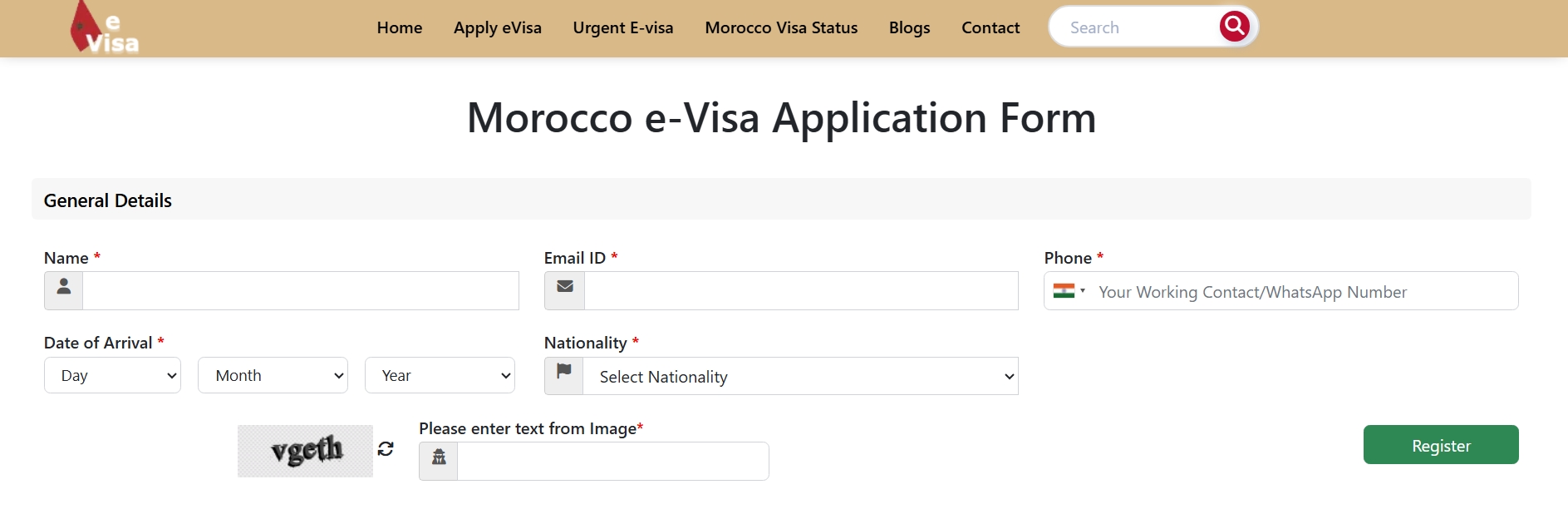
Step 3: Fill in the Online Application
Find the eVisa application link for Morocco, fill in your personal details exactly as they appear in your passport.
Upload scanned copies or digital images of the supporting documents.
Confirm your travel dates (arrival, departure) and stay details.
Accept the conditions and submit.
Step 4: Wait for Approval & Download
Once your application is submitted, you’ll receive notification (usually by email) once the eVisa is approved.
Download and print the eVisa (or keep a digital copy) to carry with you when you travel.
Step 5: Travel with Confidence
When arriving in Morocco, present your passport and the eVisa (printed or digital) at the entry point.
Keep your accommodation booking, onward ticket, and other supporting documents handy — you may be asked.
Treat the process like planning a trip in advance — the more organised you are, the smoother the journey.
What Documents Are Required for a Moroccan eVisa for Bangladeshi Nationals?
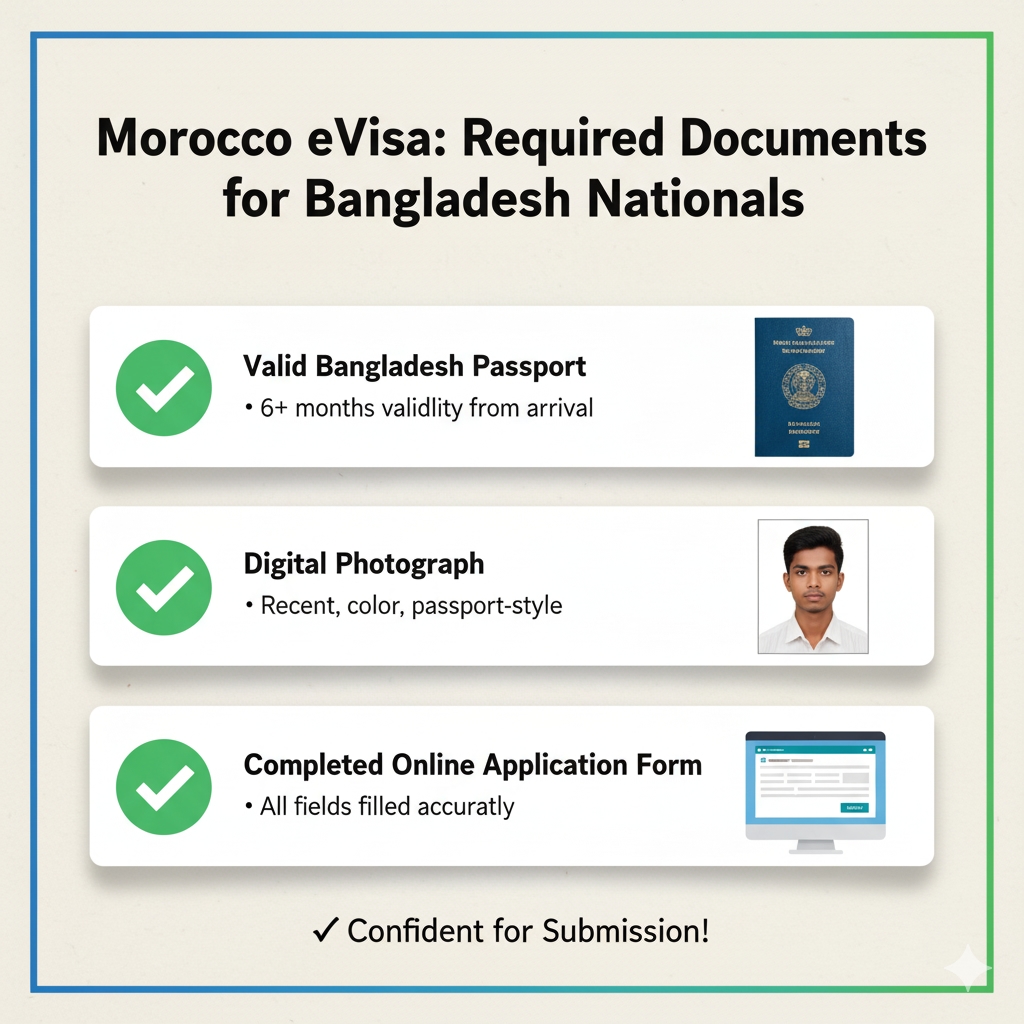
Here’s a checklist of what you’ll typically required document for Morocco eVisa:
Valid Passport: Your Bangladeshi passport should be valid for at least six months beyond your planned arrival date.
Digital Photograph: Recent colour photograph meeting passport-style specifications.
Make a checklist with these items and tick them off — you’ll feel much more confident walking into the final submission.
What Are the Processing Fees for a Moroccan eVisa for Bangladeshi Citizens?
When it comes to Morocco eVisa fee and timing, the information for Bangladeshi applicants is a bit uneven. However, here’s what we know:
Many platforms indicate that Bangladeshis applying through the traditional route (sticker visa) face a certain standard fee and typical processing time of around 5–10 working days.
For the eVisa, one source mentions a processing time of 10 business days for approval in general.
Exact fee figures for the eVisa specifically for Bangladeshi citizens are not always clearly published, so it’s wise to check the latest update either via the mission or visa-service provider you’re working with.
Because the fee structure might change (and extra service charges might apply), prepare to accept a range. It’s better to budget a little extra rather than be caught off guard. Always include the local bank transfer or payment method in your planning.
What Types of Visas Are Available for Bangladeshi Citizens Traveling to Morocco?
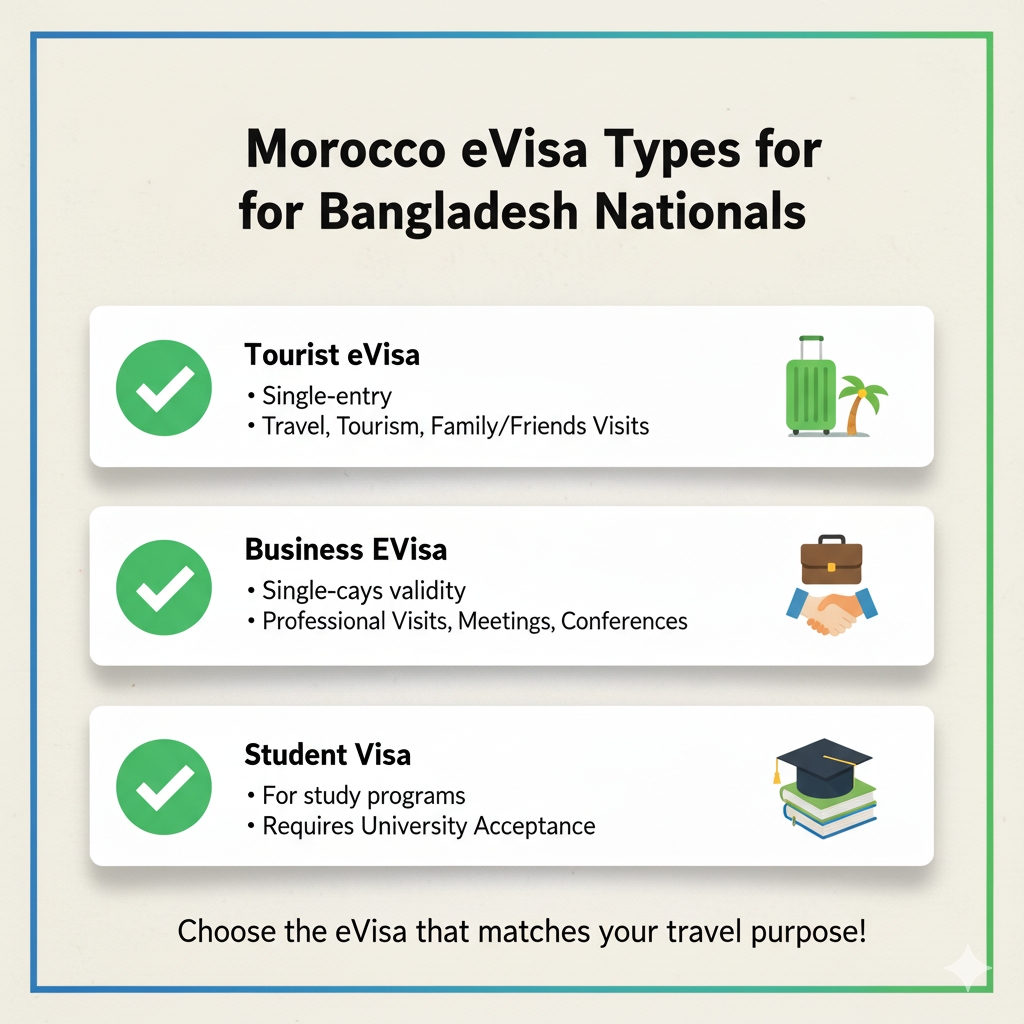
Good news: you have several options depending on your travel purpose to Morocco. Here’s a breakdown:
Tourist eVisa: Single-entry visa valid for 180 days, suitable for travel, tourism, or family and friend visits.
Business eVisa: Single-entry visa valid for 180 days, designed for professional visits, meetings, and conferences.
Each Morocco eVisa types has its eligibility, validity and conditions — so pick the one that matches your travel style.
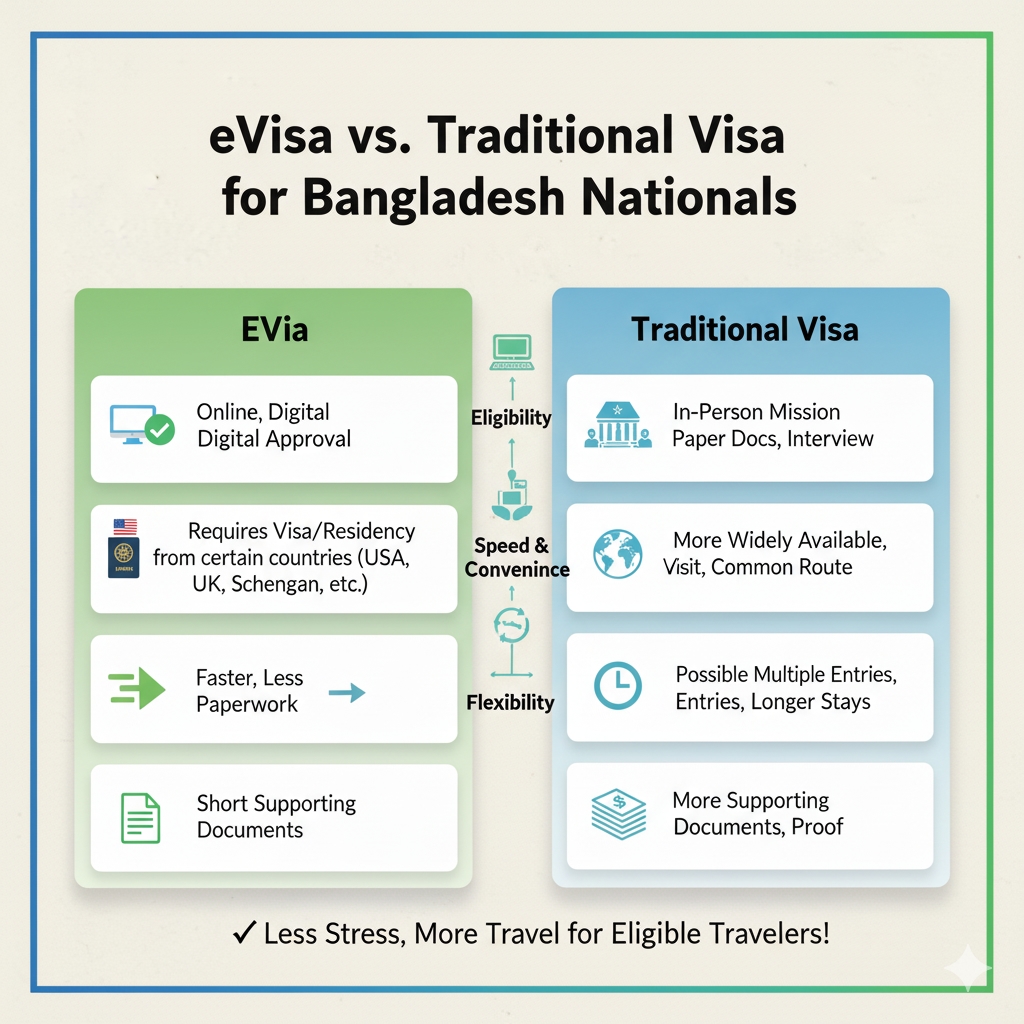
What is the Difference Between a Moroccan eVisa and a Traditional Visa for Bangladeshi Citizens?
Here are the key contrasts when you compare the eVisa route vs the traditional visa (via mission) for Bangladeshi travellers:
Application Mode
eVisa: Done online, you upload documents, receive digital approval, print or carry electronically.
Traditional Visa: You may need to visit the mission in person, submit paper documents, and possibly attend an interview.
Eligibility
eVisa: Usually requires holding a visa or residence permit from a certain list of countries (USA, UK, Schengen, etc.).
Traditional Visa: More widely available, common route if you don’t meet those extra requirements.
Speed & Convenience
eVisa: Typically faster, less physical paperwork, favourite for tourists who meet the criteria.
Traditional Visa: More time-consuming, more formalities, possibly face-to-face appointments.
Flexibility
eVisa: Typically for short stays (in many cases up to 30 days for Bangladeshis under the eVisa clause) and likely single entry.
Traditional Visa: May allow multiple entries, longer stays depending on category (business, study, etc.).
Cost & Documents
While fees may be comparable, the traditional process often includes more supporting documentation, and you may be required to present more proof at application or arrival.
For a Bangladeshi traveller who meets the eVisa eligibility, picking the electronic route usually means less stress and more time to dream about souks and Sahara dunes.
Are There Any Special Requirements for Minors Traveling to Morocco from Bangladesh?
Yes — especially when minors (under 18) are involved, there are extra things to watch:
A minor’s passport must be valid and in good condition, same as adults.
If the minor is travelling with only one parent or a guardian, a consent letter from the other parent (or legal guardian) is usually recommended.
Sometimes documentation showing the relationship (birth certificate, guardian authorisation) may be needed.
For minors applying under the eVisa route, the same eligibility criteria apply; the document set must include the minor’s credentials plus any extra parental consent forms where applicable.
As a travel blogger tip: carry photocopies of both parents’ passports plus the minor’s birth certificate, just in case you are asked to present them at entry. Better safe than sorry!
Are There Any Specific Health Requirements for Bangladeshi Citizens Applying for a Moroccan eVisa?
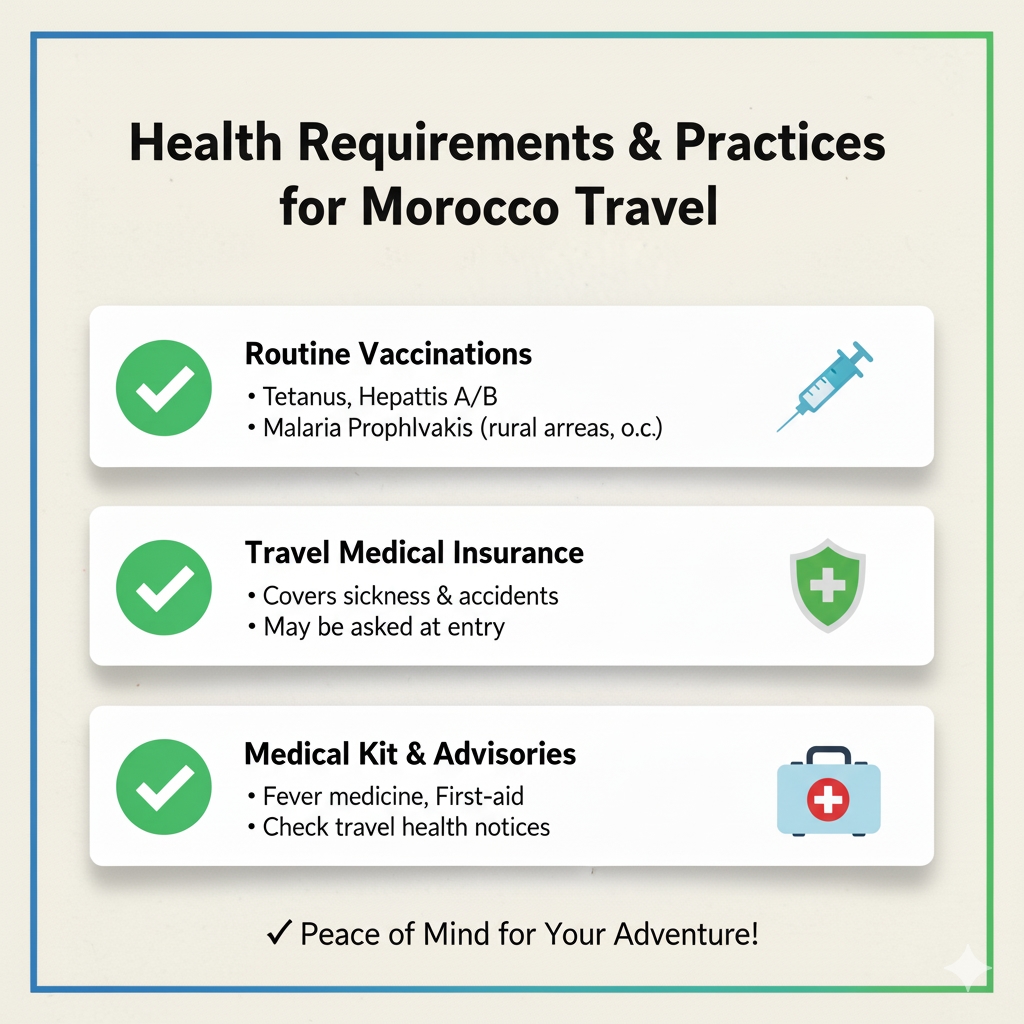
Health planning is a key part of safe travel. While there is no blanket requirement specifically for eVisa holders from Bangladesh to Morocco (at least from widely-available public sources), here are some good travel health practices:
Ensure routine vaccinations are up to date (e.g., tetanus, hepatitis A/B).
Depending on your travel itinerary, health professionals about malaria prophylaxis (especially if you plan to venture into rural areas).
Make sure you have valid travel medical insurance covering sickness and accidents during your stay — in some cases this might be asked during your application or at entry.
Carry a small medical kit (fever medicine, basic first-aid).
Check for any health notices for Morocco from Bangladeshi authorities or travel advisories before departure.
Good health preparation ensures your eVisa gets you through the border and into your adventure with peace of mind.
Can Bangladeshi Citizens Apply for a Moroccan eVisa Online?
Yes — under certain conditions, Bangladeshi citizens can apply for the Morocco eVisa online. Many travel-information sites state that for the eVisa route, candidates must hold a visa or residence permit from defined countries to be eligible.
If you meet those conditions, the application is entirely digital: upload your documents, pay the processing (online or via designated method), and wait for the approval email.
However, if those criteria aren’t met — for example, you do not hold a qualifying secondary visa/residence permit — then you will likely need to undergo the traditional visa process (paper application via the mission). It’s wise to check your eligibility early to avoid delays.
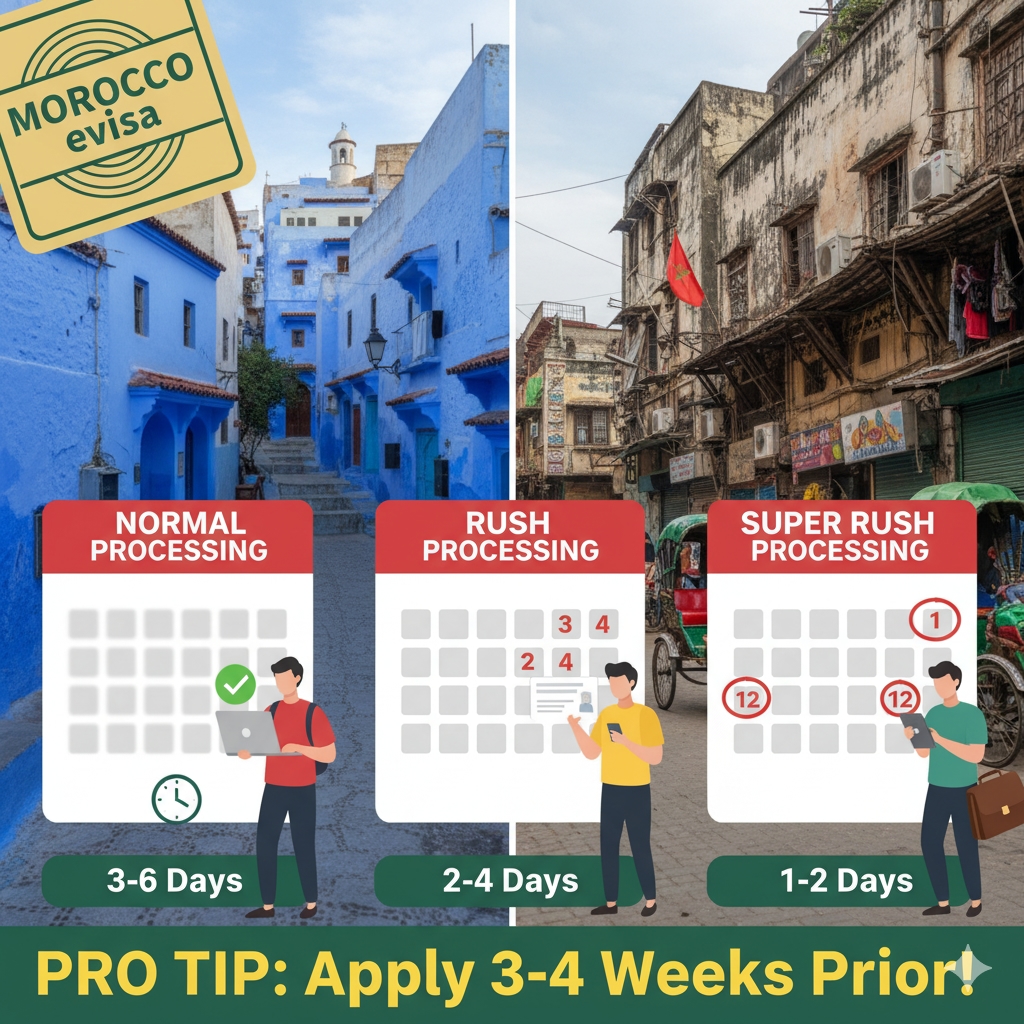
How Long Does It Take for Bangladeshi Citizens to Get a Moroccan eVisa?
Based on available data:
Normal Processing: This standard option typically takes around 3 to 6 days for approval. It’s best suited for travelers who are not in a rush and can afford the typical processing time. If your travel plans are flexible and you’ve applied well in advance, this option is cost-effective and reliable for most standard applications.
Rush Processing: For those who need their eVisa approval a bit sooner, Rush Processing takes approximately 2 to 4 days. This is perfect for travelers who may have a tighter schedule but still have a few days before their departure. It’s ideal for last-minute plans without needing immediate approval.
Super Rush Processing: If time is of the essence, Super Rush Processing guarantees approval within just 1 to 2 days. This expedited service is perfect for urgent travel situations, such as business trips or emergency visits, where you need fast and efficient approval.
Pro tip: Apply at least 3–4 weeks prior to your travel dates (even if eVisa) to allow buffer for any unexpected delays or document clarifications.
What is the Validity Period of a Moroccan eVisa for Bangladeshi Citizens?
Here’s what we know about validity and stay duration:
One source mentions that the eVisa for Bangladeshi travellers is valid for 180 days from date of issue, and allows a stay of up to 30 days per trip.
For traditional short-stay visas, a stay of up to 30 days within 180 days is also referenced.
Long-stay visas (traditional route) may permit longer validity (up to one year) though each stay at a time may be capped (for example 90 days).
Important note: Validity (how long the visa is valid) and stay length (how many days you can remain in Morocco) are different. Always check both. Also, your entry date must fall within the validity window.
Is It Safe for Bangladeshi Citizens to Travel to Morocco with an eVisa?
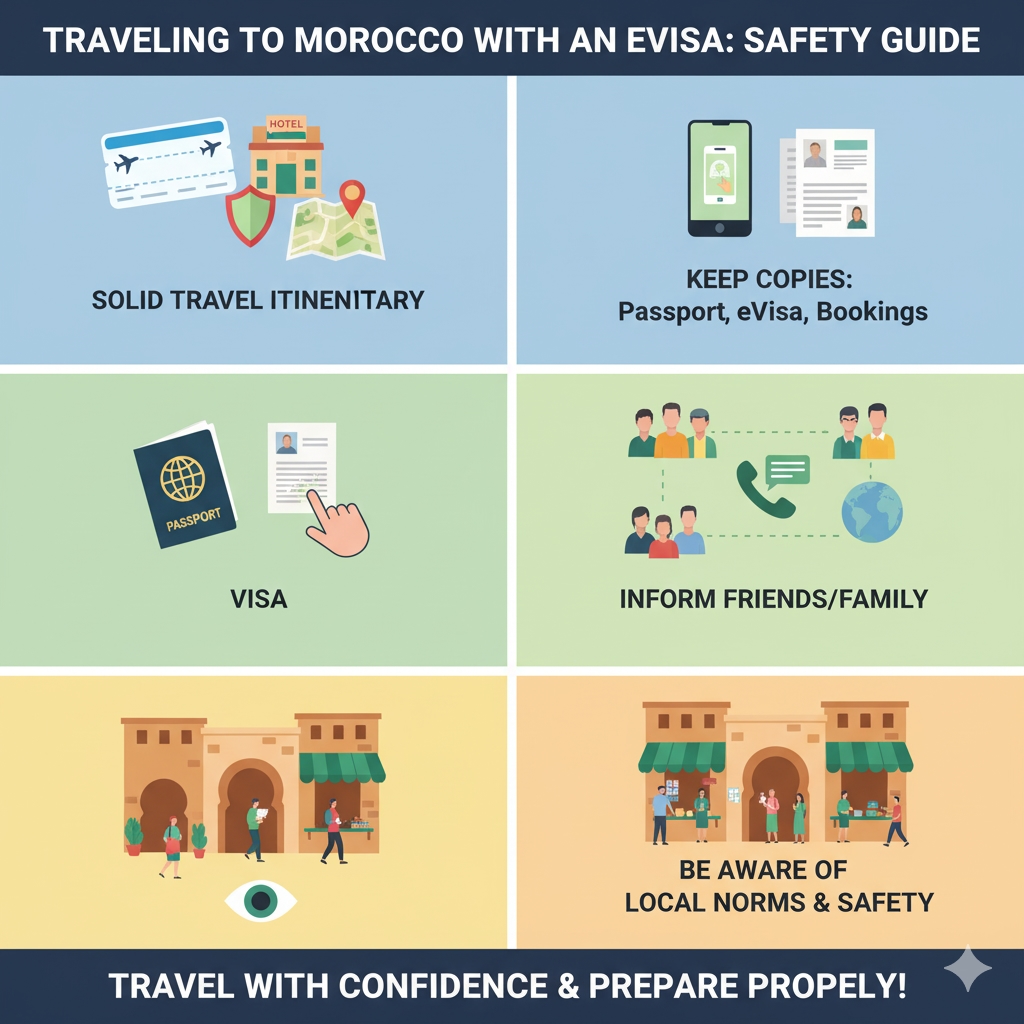
Yes — travelling to Morocco with an approved eVisa is generally safe, but like any travel abroad, it comes with planning and smart steps. Here’s what you should keep in mind:
Ensure your travel itinerary is solid: flights, accommodation, travel insurance, and destination plan.
Keep electronic and physical copies of your passport, eVisa, booking confirmations and other documents.
Inform friends/family in Bangladesh about your travel plan — share arrival details and contact information.
Be aware of local norms & safety: Morocco is considered a safe destination overall, but it’s wise to stay vigilant, especially in crowded markets or unfamiliar areas.
Make sure you meet the eVisa conditions and carry all backed-up documentation. If you fail to prove eligibility, there might be disruptions at arrival.
With proper preparation and awareness, your Morocco eVisa can open the door to an unforgettable journey with confidence.
Is There an Age Limit for Bangladeshi Citizens Applying for a Moroccan eVisa?
There is no publicly stated strict upper age limit for applying for the Morocco eVisa specifically for Bangladeshi citizens. However, as a standard travel preparation:
Applicants of any adult age must meet the eligibility conditions (passport validity, supporting documents, etc).
For minors (under 18) additional consent documents may be required (as discussed earlier).
For seniors, ensure health-related travel preparedness (insurance, suitable itinerary, rest times) is covered.
If you’re applying with children or elderly companions, make sure all their documents are in order (passport validity, consent forms, supporting proof).
So yes — whether young or old, you can apply, but document readiness and health readiness matter.
Are There Any Special COVID-19 Regulations for Bangladeshi Citizens Traveling to Morocco?
As the global travel landscape has shifted, so have health protocols. For Morocco travel:
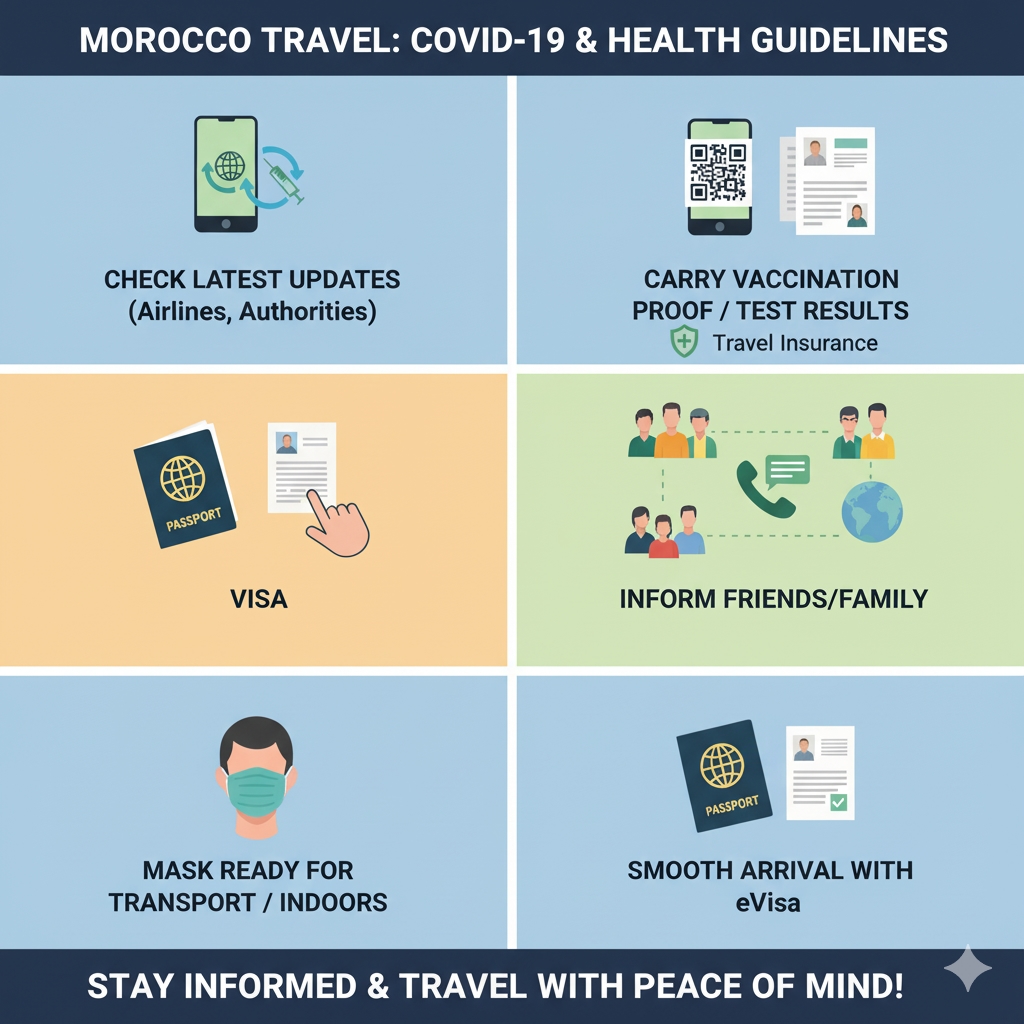
Check for the latest updates from airlines, Moroccan authorities or your departure point in Bangladesh for any requirements (vaccination, pre-travel testing, forms) just prior to travelling.
While many COVID-19 restrictions globally have eased, some venues (airports, transport, tours) may still ask for proof of vaccination or negative results depending on time and situation.
Carry vaccination certificates (digital or paper) and possibly COVID-19 travel insurance for peace of mind.
Arrive with a simple mask in your bag — local rules may require indoors or in transport during unexpected changes.
By staying informed up to the day of departure, you avoid last-minute surprises and ensure a smooth arrival with your Morocco eVisa.
Is It Possible to Get a Moroccan eVisa on Arrival for Bangladeshi Citizens?
No — there is no reliable indication that Bangladeshi passport holders can obtain a Morocco eVisa or any other visa on arrival in Morocco under the standard arrangement. A source states that Bangladeshis must obtain a visa in advance (either eVisa or traditional) rather than rely on arrival entry.
Therefore, do not plan to travel expecting arrival-visa convenience. Organising your visa ahead of time is crucial.
How Can Bangladeshi Citizens Apply for a Moroccan eVisa If They Are Already Abroad?
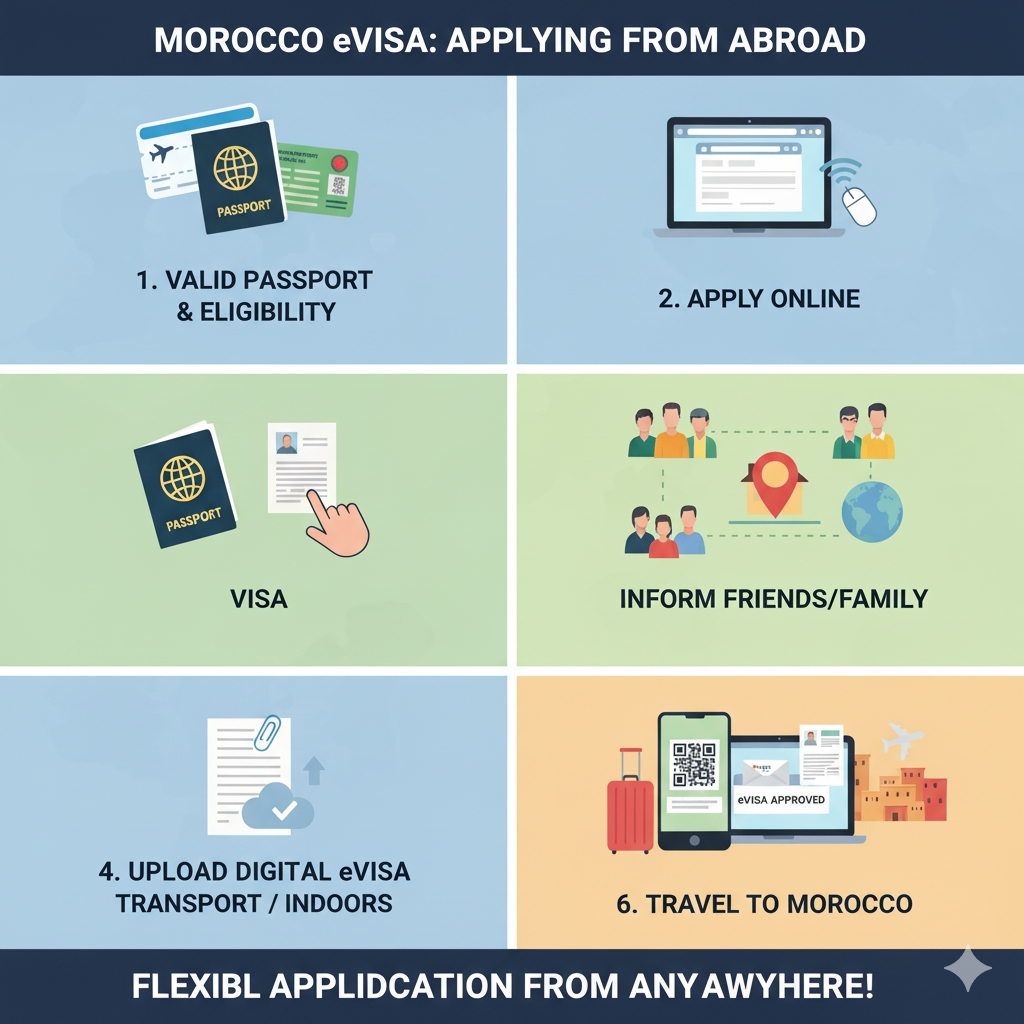
If you are a Bangladeshi citizen living or temporarily staying abroad and want to apply for your Morocco eVisa, here’s how you might proceed:
Ensure your Bangladeshi passport is valid and you meet the eligibility criteria (visa/residence permit of a qualifying country if required).
Use your current location’s internet access to complete the online eVisa application (if eligible). The digital nature means you don’t have to be physically in Bangladesh.
Provide your local address abroad or your Bangladesh-based address depending on what the form asks.
Upload required documents from your current residence status abroad (valid visa/residence permit, etc).
Once approved, your digital eVisa is emailed — you can travel from your current location to Morocco, as long as your passport and travel dates fit within the permit validity.
If you don’t meet the eVisa criteria, you may need to submit a traditional visa application. In that case, check with the nearest mission of Morocco or its designated visa-centre that covers your country of residence.
This flexibility is great if you’re travelling from another country rather than departing directly from Bangladesh.
What Are the Key Differences Between Moroccan eVisas and Other North African eVisas for Bangladeshi Citizens?
If you’ve done some travel research, you might have spotted that many North African nations are launching eVisa or online-application systems. For a Bangladeshi traveller comparing, here are the highlights of how the Morocco eVisa stacks up:
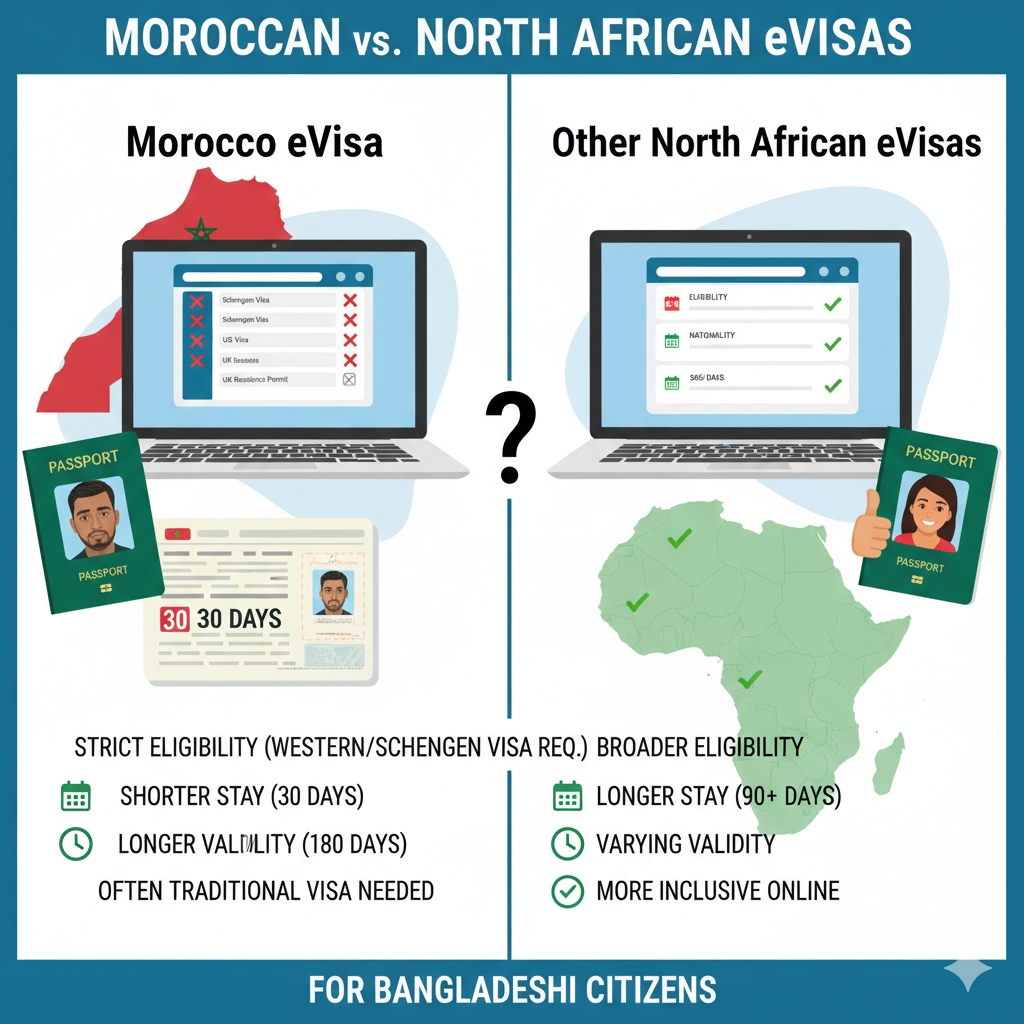
Eligibility stringency: The Morocco eVisa route often requires you to already hold a visa or residence permit from certain Western or Schengen countries before you qualify. Not all North African eVisas have that extra requirement. For example, some countries may allow eVisa from more nationalities without secondary visa conditions. For Morocco, this is emphasised in eligibility lists.
Stay length: The stay permitted under Morocco’s eVisa for Bangladeshis may be up to 30 days (according to one source), which is fairly standard but somewhat shorter compared to some neighbouring systems that might permit longer stays.
Validity period: Morocco eVisa (for eligible travellers) may be valid up to 180 days to use the permit, which gives flexibility in when you travel. Other countries' eVisas may have shorter validity windows.
Traditional Visa Required Route: Due to the eligibility caveats, many Bangladeshi travellers to Morocco still need the traditional visa rather than purely online. Some North African countries may offer more inclusive online options.
Online Infrastructure: Morocco’s eVisa system is relatively new (launched in 2022 as part of the broader visa-policy reform). The level of online submission, digital approvals and user-friendliness may therefore vary compared to more mature systems elsewhere.
So if you’re comparing options, the Morocco eVisa offers many of the convenience perks of e-visas, but you’ll want to check carefully against the eligibility constraints. It’s not quite ‘apply and go’ for everyone, but it’s definitely a strong route if you qualify.
Are agents more helpful for first-time travelers compared to official websites?
Absolutely, yes! For first-time travelers, using a trusted agent website like morocco-evisa.org can make the entire visa process much smoother, faster, and stress-free
Here’s why:
Step-by-step guidance: The agent site provides clear, easy instructions and helps you fill out every part of your eVisa application correctly.
24/7 assistance: You get real-time help from experts who understand the Morocco eVisa system perfectly.
Error-free processing: First-time travelers often make small mistakes on government websites, which can delay approval. The agent website reviews your documents to ensure accuracy before submission.
Quick updates: morocco-evisa.org keeps you informed with email updates and status tracking, so you’re never left wondering.
User-friendly experience: The site is designed for all users, even those who’ve never applied for a visa before — simple layout, clear steps, and friendly design.
Government websites, on the other hand, may have complex layouts, limited support, and no personal assistance. That’s why travelers, especially first-timers, prefer agent websites like morocco-evisa.org — because they make the process easy, reliable, and worry-free
When Is the Best Month for Bangladeshi Residents to Visit Morocco?
Picking the right time to travel can make your Morocco adventure even more magical. For Bangladeshi travellers, here are some recommendations:
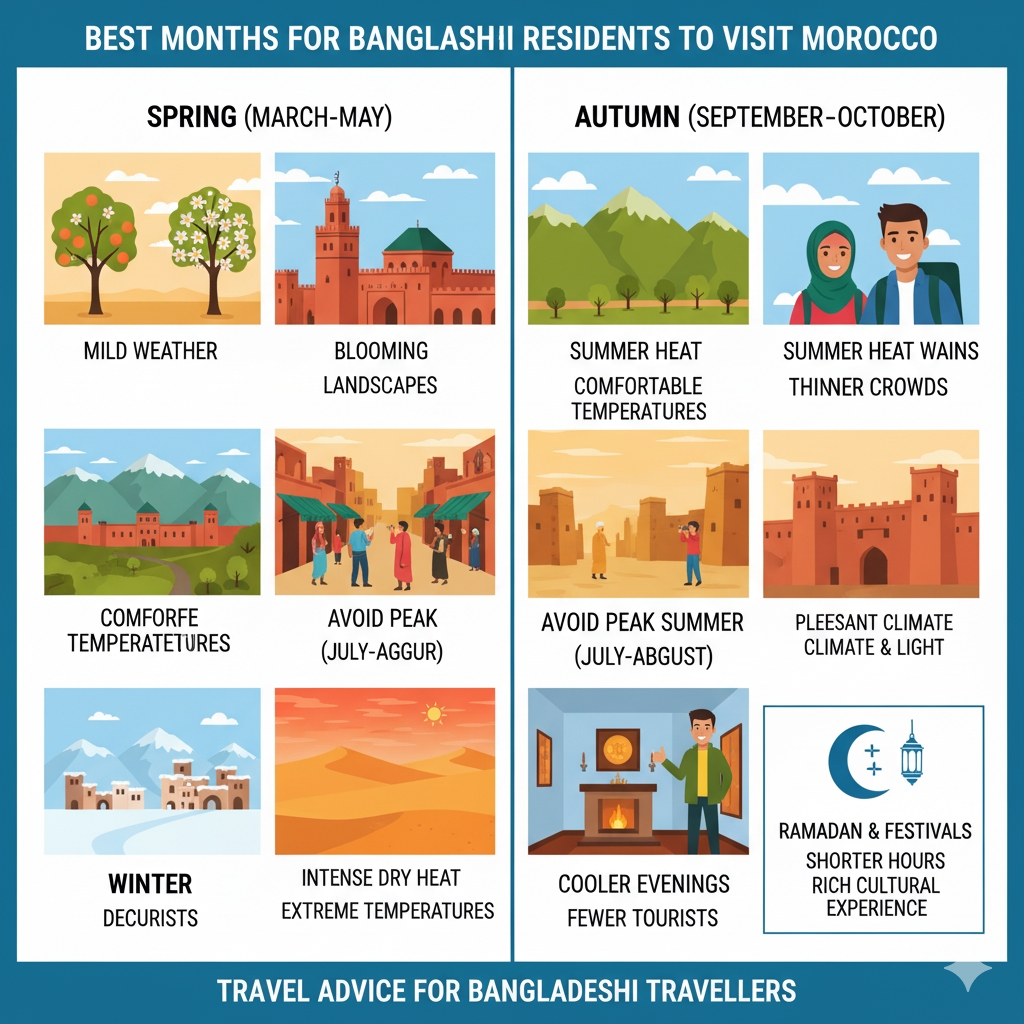
Spring (March to May): This tends to be one of the best times — mild weather, blooming landscapes, comfortable temperatures for exploring cities like Marrakech, Fes, and the Atlas Mountains.
Autumn (September to October): Also excellent — the summer heat wanes, the crowds thin somewhat, and you’ll find pleasant climate and good light for photography.
Avoid the peak summer (July-August) in certain inland or desert areas if you’re not used to intense heat – Bangladesh’s climate is already hot/humid, but Moroccan deserts and plains can be very dry and extreme.
Winter (December to February): If you’re okay with cooler evenings (especially in the mountains) and you’d like fewer tourists, this can be a cosy choice. Just pack layers.
Ramadan & Festivals: If you plan travel around the time of Ramadan or major festivals (dates vary each year), be aware that some shops/restaurants may shift their operating hours — but it also offers a rich cultural experience.
For Bangladeshi visitors, balancing comfort, weather and cultural events suggests April or October as prime travel months for a smooth and memorable trip.
What Are the Common Mistakes Bangladeshi Citizens Make on Moroccan eVisa Applications?
When applying for the Morocco eVisa, a few common missteps keep popping up — avoid these and you’ll boost your chances of smooth approval:
Not checking eligibility: Many assume the eVisa route is open to all but miss the condition about holding a visa or permit of certain countries. Double-check before applying.
Passport validity oversight: Applying with a passport that has less than six months' validity or is near expiry can cause delays or rejection.
Poor quality or incomplete document uploads: Images that are blurry, missing pages, or documents not in required format/photos improperly sized can prolong processing.
Mismatch between personal info and travel plan: For example, names spelled differently, arrival/departure dates unclear, accommodation not confirmed.
Submitting too close to travel date: Even if the eVisa promises fast approval, give yourself buffer time — unexpected delays can happen.
Not keeping printouts/backups: Travellers sometimes forget to print their approved eVisa or save electronic copy, then face problems on arrival.
Ignoring arrival requirements: Having the eVisa is one thing—you still need to present passport, accommodation proof, routes etc. Don’t skip these.
As a friendly travel blogger tip: create a folder (physical or digital) labelled “Morocco eVisa & Travel Docs” and check off everything at least one week before departure.

Comments