You're driving home, the sun is beating down, and you reach for the AC controls, expecting instant relief—except the air coming out is barely cool, or worse, warm. For Land Rover owners, this moment feels almost contradictory. These are vehicles engineered around comfort as much as capability, yet the climate system is failing at its most basic job. The good news is that Land Rover AC Repair done properly can resolve this permanently, but only if the underlying cause is actually identified rather than papered over.
Before diving into fixes, it helps to understand how a Land Rover AC system actually works. Unlike a basic setup found in economy vehicles, Land Rover climate control involves multiple independently controlled zones, humidity sensors, air quality monitoring, and a network of components that all communicate with the car's central computer. When one part of this chain breaks down, the symptoms can be misleading — which is exactly why so many AC repairs go wrong.
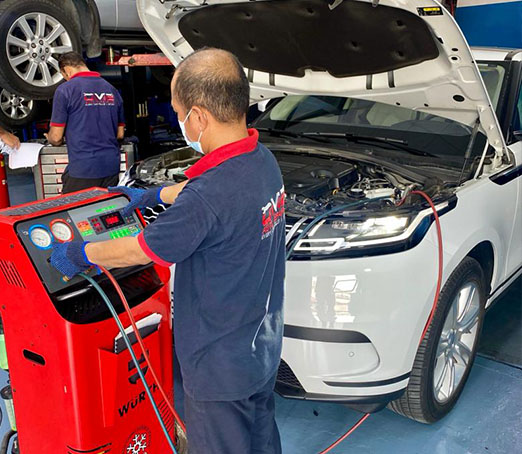
Understanding What "Warm Air" Actually Means
Warm air from the vents doesn't automatically mean the AC system is completely broken. It's usually one of a handful of specific issues:
Low refrigerant due to a leak — The most common cause, but rarely the whole story, since refrigerant loss almost always points to a leak somewhere.
A failing compressor — If the compressor can't build pressure properly, cooling suffers even with adequate refrigerant.
A stuck or faulty blend door actuator — This mechanical component controls the mix of hot and cold air, and when it fails, warm air can dominate regardless of your temperature setting.
Electrical or sensor faults — A malfunctioning temperature sensor can trick the system into thinking the cabin is already cool, reducing cooling output unnecessarily.
Pinpointing which of these is actually happening is the entire point of proper Land Rover AC Repair—and it's the step many quick-fix garages skip entirely.
Why Skipping Diagnosis Leads to Repeat Visits
It's tempting for a workshop to assume "warm air equals low refrigerant" and simply recharge the system. Sometimes this works temporarily. But if the real cause is a leak, a failing compressor, or a faulty actuator, the warm air returns within days or weeks—and you're back at the workshop, paying again for a problem that was never actually solved.
Genuine Land Rover AC Repair treats the diagnostic phase as non-negotiable, not optional. A technician should be able to explain, in plain terms, exactly why the AC failed before recommending any fix.
What a Proper Diagnostic Actually Looks Like
Here's the sequence a thorough repair should follow:
1. Fault code and sensor data scan — Checking what the vehicle's computer is reporting about the climate system.
2. Refrigerant pressure testing — Measuring pressure on both sides of the system to identify irregularities consistent with a leak or compressor issue.
3. Leak detection — Using UV dye or an electronic sniffer to physically locate where refrigerant is escaping, if applicable.
4. Actuator and blend door testing — Confirming these mechanical components are moving correctly and not stuck in a fixed position.
5. Post-repair test drive — Running the AC through a real cooling cycle, not just a static test, to confirm the fix holds under actual driving conditions.
Only after all of this is a genuine diagnosis reached — and only then should any parts be replaced. This structured approach is what separates real Land Rover AC Repair from a quick, unreliable patch job.
Common Mistakes Owners Make Before Booking a Repair
Many Land Rover owners unintentionally make the diagnostic process harder by not paying attention to how the AC failure actually presents itself. Before booking, note the following: a repair, try to note:
Does the AC blow warm constantly, or only at idle/low speeds?
Is the airflow weak, normal, or strong despite being warm?
Does one zone stay cooler than others, or is the whole cabin affected?
Are there any unusual noises when the AC is switched on?
These details, when relayed to a technician, can significantly speed up an accurate diagnosis.
Independent Workshops vs. Dealership Repairs
There's a persistent belief that only dealerships can properly handle Land Rover AC Repair for complex electronics. In reality, many independent workshops that specialize in Land Rover vehicles use the exact same diagnostic software and genuine parts, often at a meaningfully lower price. What matters isn't the type of workshop — it's whether they treat proper diagnosis as a mandatory first step rather than an optional add-on.
The Cost of Waiting Too Long
A minor AC inefficiency rarely stays minor. A small refrigerant leak, left unaddressed, eventually drains the system completely and can starve the compressor of the lubrication it needs to function, leading to a full compressor failure. What could have been a straightforward, affordable leak repair turns into a much larger bill involving compressor replacement.
Addressing warm air symptoms as soon as they appear, rather than tolerating them through an entire summer, is one of the simplest ways to avoid this kind of escalation.
Final Thoughts
Warm air from your Land Rover's AC vents is a symptom, not a diagnosis. The real fix depends entirely on correctly identifying what's actually failing — a leak, a compressor, an actuator, or a sensor — rather than guessing. Choosing a workshop that treats proper diagnosis as essential for Land Rover AC Repair, not optional, is the difference between a permanent fix and a recurring headache every few weeks.
Frequently Asked Questions
1. Why is my Land Rover AC blowing warm air even though I just had it recharged?
This usually means the underlying leak or fault was never actually fixed—a recharge alone only offers temporary relief.
2. Can a blend door actuator cause warm air even with a fully working compressor?
Yes — if this component gets stuck, it can block cold air from reaching the vents regardless of how well the rest of the system is functioning.
3. How can I tell if the problem is the compressor or a sensor issue?
A proper diagnostic scan combined with pressure testing can distinguish between mechanical compressor failure and an electronic sensor fault.
4. Is it normal for AC problems to come back after a repair?
It shouldn't be; if warm air returns shortly after a repair, it usually means the original diagnosis missed the actual root cause.
5. What should I tell the technician when booking an AC repair?
Mention whether the air is warm constantly or only at certain speeds, whether airflow is weak, and if any zones cool differently than others.
6. Does waiting to fix a small AC issue make it worse?
Yes — a small leak can eventually drain the system fully and damage the compressor, turning a minor repair into a much costlier one.
Comments