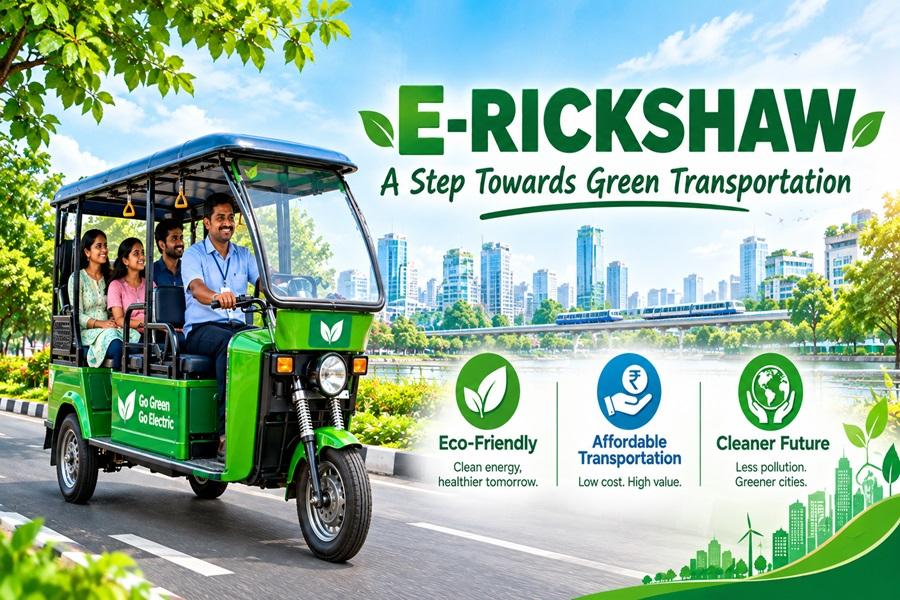
An E rickshaw, also known as an electric rickshaw, is a modern and eco-friendly means of transportation. It is a battery-powered three-wheeler used to carry passengers and goods over short distances. In India, e-rickshaws have become increasingly popular because they are affordable, convenient, and environmentally friendly.
Importance of E-Rickshaws
E-rickshaws play an important role in improving local transportation. They provide an easy way to travel to schools, colleges, markets, railway stations, bus stops, and workplaces. They are especially useful in crowded cities and small towns where narrow roads and heavy traffic make travelling difficult.
Environmental Benefits
One of the greatest advantages of e-rickshaws is that they do not produce tailpipe emissions while operating. Unlike petrol and diesel vehicles, they do not release exhaust fumes directly into the surrounding air. This helps reduce local air pollution and contributes to a cleaner environment. They also produce less noise, making them a quieter transportation option.
Economical Transportation
E-rickshaws are economical for both drivers and passengers. The cost of charging their batteries is generally lower than the cost of petrol or diesel. They also have fewer moving parts, which can help reduce maintenance expenses. Passengers can often travel short distances at affordable fares, making e-rickshaws a convenient option for daily commuting.
Employment Opportunities
E-rickshaws provide employment opportunities to thousands of people across India. Many individuals use them to earn a livelihood and support their families. Compared with some conventional commercial vehicles, e-rickshaws can have lower operating costs, making them an attractive option for small transportation businesses. Thus, they contribute to local economic development and self-employment.
Challenges of E-Rickshaws
Despite their advantages, e-rickshaws face several challenges. Limited charging facilities, battery replacement costs, traffic congestion, and road safety are major concerns. Overloading and careless driving can also lead to accidents. These problems can be reduced through proper driver training, regular vehicle maintenance, improved traffic management, and the development of reliable charging stations.
Future of E-Rickshaws in India
The future of e-rickshaws in India is promising. Improvements in battery technology, better charging infrastructure, and supportive government policies can encourage their wider adoption. Using renewable electricity and recycling batteries responsibly can further improve their environmental benefits. E-rickshaws can also connect passengers to buses, trains, and metro stations, making public transportation more accessible.
Conclusion
E-rickshaws are an important step towards sustainable transportation. They offer affordable travel, create employment opportunities, and help reduce local air and noise pollution. Although some challenges remain, proper planning, responsible driving, and technological improvements can make them even more effective. E-rickshaws are not just a convenient mode of transport; they are a symbol of a cleaner, greener, and more sustainable future for India.
Comments