Canada eTA Eligibility for Saint Kitts and Nevis Passport Holders
Canada eTA Online Application for Saint Kitts and Nevis travelers makes visiting Canada easier for tourists planning holidays, family visits, or short business trips. Eligible citizens can complete the application process online before traveling to Canada by air. The Canada eTA is electronically linked to the traveler’s passport and is commonly used for short-term tourism experiences across popular Canadian destinations.

With the Canada eTA Online Application for Saint Kitts and Nevis , travelers can explore Canada’s famous cities, natural parks, cultural attractions, and seasonal festivals with greater convenience. Visitors should ensure they carry a valid passport, travel documents, and supporting information before departure. Applying correctly helps tourists enjoy a smooth travel experience while discovering Canada’s beautiful landscapes and modern attractions.
What Are the Canada eTA Application Categories?
When you begin your application, it is important to understand the standard framework of the eTA. While individual circumstances vary, the general structure for the Canada eTA for eligible travelers typically follows these parameters:
- Visa Type: eTA (Electronic Travel Authorization)
- No. of Entries: Multiple
- Max. Stay: 180 Days
- Validity: 1 Year (or until passport expiry, whichever comes first)
How Does the Processing Time Look for My Canada eTA Application?
Canada eTA processing time may vary depending on the selected service option and the accuracy of the submitted application details.
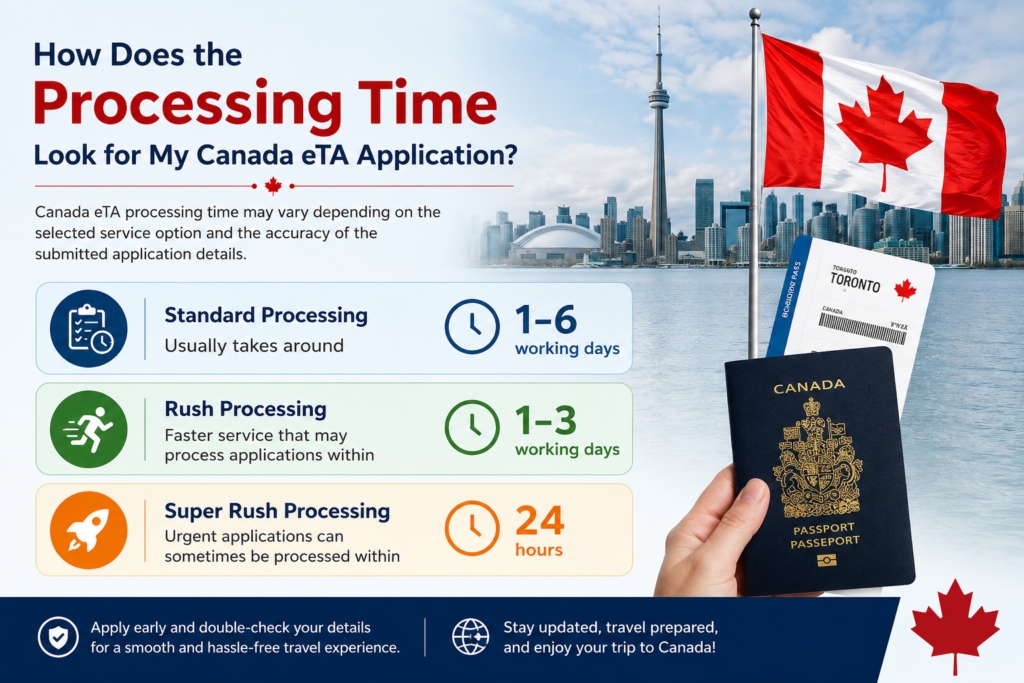
- Standard Processing – Usually takes around 1–6 working days for approval.
- Rush Processing – Faster service that may process applications within 1–3 working days.
- Super Rush Processing – Urgent applications can sometimes be processed within 24 hours.
How Do I Determine My Eligibility for a Canada eTA?
Eligibility for a Canada eTA depends on your nationality, passport type, and travel purpose before flying to Canada.
- Check Your Nationality – Citizens from eligible visa-exempt countries can apply for a Canada eTA.
- Canada eTA Requirements for Saint Lucia Passport Holders
- Canada eTA for St. Vincent and the Grenadines Citizens
- Canada Online Travel Authorization for Seychellois Citizens
- Canada Tourist eTA for Thailand Nationals
- Canada eTA Eligibility for Trinidad and Tobago Citizens
- Apply Canada eTA from Uruguay Citizens
- Valid Passport Requirement – Travelers must hold a valid passport from an approved country.
- Air Travel Condition – The Canada eTA is mainly required for travelers entering Canada by air.
- Purpose of Visit – The eTA can be used for tourism, business trips, or airport transit.
- Short-Term Stay Only – Eligible visitors are usually allowed temporary stays in Canada.
- No Serious Immigration Violations – Past immigration or criminal issues may affect eligibility.
- Online Application Availability – Eligible travelers can complete the Canada eTA process online.
- Travel Authorization Approval – Final entry permission is decided by Canadian border authorities upon arrival.
What Are the Steps to Apply for a Canada eTA?
Applying for a Canada eTA involves completing a simple online process with accurate passport and travel information before flying to Canada.
- Complete the Online Form – Enter personal, passport, and travel details carefully.
- Review Application Information – Double-check all information to avoid mistakes or delays.
- Pay the Application Fee – Submit the required payment securely through the online system.
- Receive Email Confirmation – Applicants usually receive updates and approval notices by email.
- Wait for Processing – Most Canada eTA applications are processed quickly, though some may take longer.
- Travel with the Same Passport – The approved eTA is electronically linked to the passport used during the application.
Why Might My Canada eTA Application Be Denied?
Receiving a denial can be discouraging, but it is rarely a random decision. Most often, the reason is rooted in a technical error or missing information. Common reasons include:
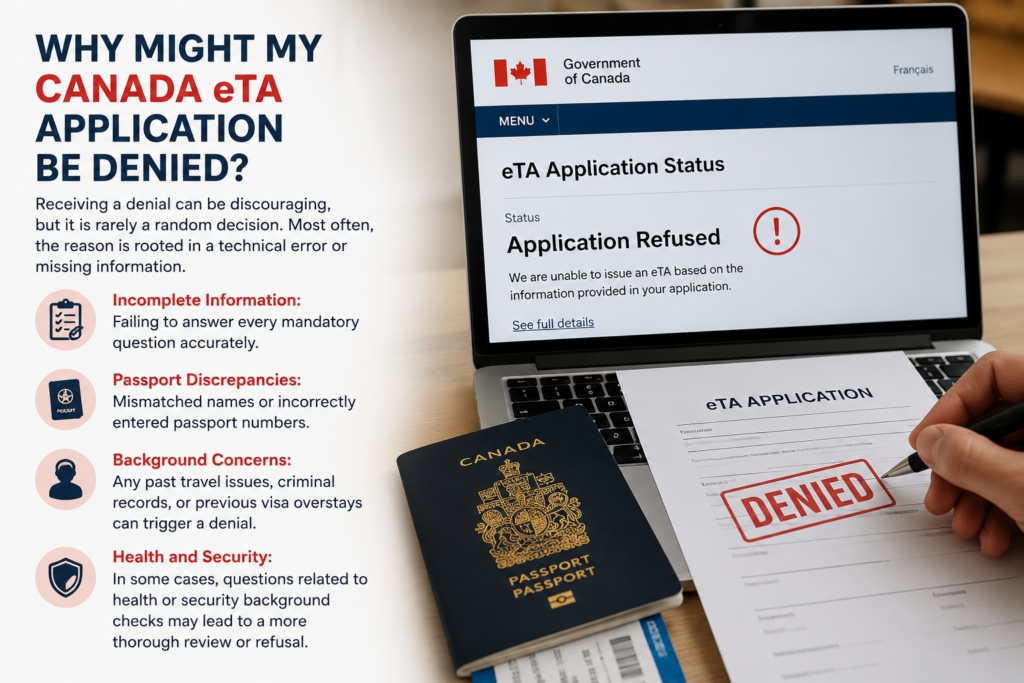
- Incomplete Information: Failing to answer every mandatory question accurately.
- Passport Discrepancies: Mismatched names or incorrectly entered passport numbers.
- Background Concerns: Any past travel issues, criminal records, or previous visa overstays can trigger a denial.
- Health and Security: In some cases, questions related to health or security background checks may lead to a more thorough review or refusal.
If you are denied, do not panic. Review the notice you receive, address the specific issue mentioned, and consider if a different visa type might be more appropriate for your situation.
Is Health Insurance Mandatory for Canada eTA Travelers?
Health insurance is not officially mandatory for Canada eTA travelers, but it is highly recommended because medical treatment in Canada can be very expensive for non-residents. Having travel health insurance helps protect visitors from unexpected medical costs caused by illness, accidents, or emergencies during their trip. It also provides peace of mind while exploring popular destinations such as the Rocky Mountains, Toronto, or Vancouver, allowing travelers to enjoy their visit without worrying about large healthcare expenses.
What Essential Documents Should I Carry for Canada eTA Travel?
Just because you have an approved eTA doesn't mean you can show up at the airport empty-handed. Customs officers may ask to see proof that your trip is genuine. It is wise to carry:
- Your Valid Passport: This must be the same one used for your application and should be valid for at least six months beyond your planned date of departure.
- Proof of Funds: A copy of a bank statement or proof of financial means to support your stay.
- Return Ticket: Proof that you intend to leave Canada within the 180-day stay limit.
- Travel Itinerary: A simple printout of your hotel bookings or invitation letters from friends and family.
What Are the Latest Canada eTA Entry Requirements I Need to Know?
Canada eTA entry requirements may change over time, so travelers should always verify the latest travel and immigration rules before departure.
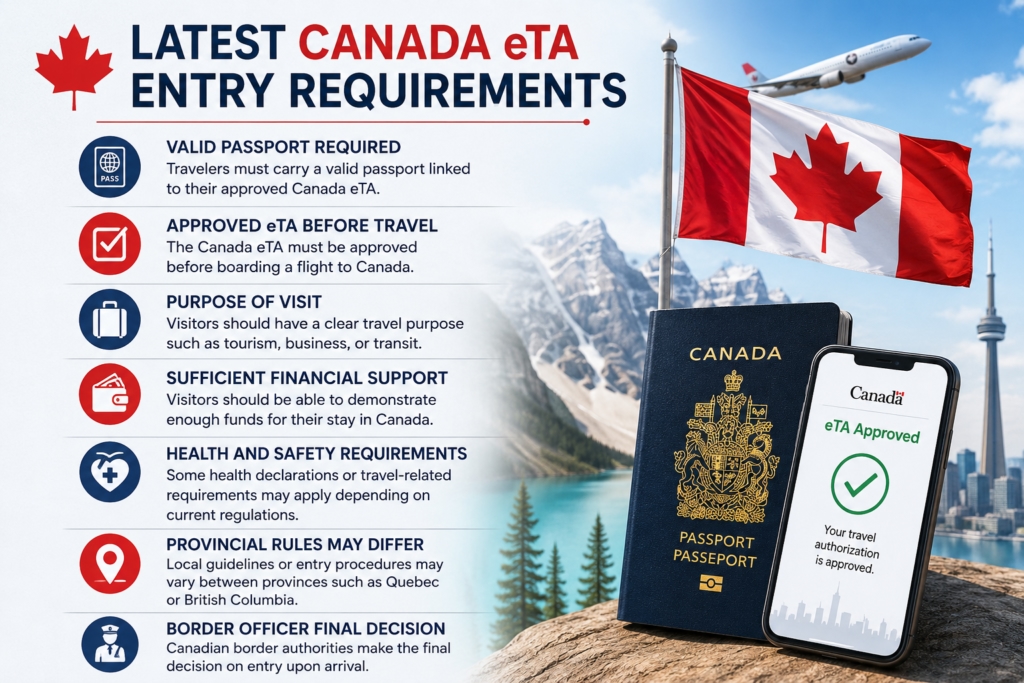
- Valid Passport Required – Travelers must carry a valid passport linked to their approved Canada eTA.
- Approved eTA Before Travel – The Canada eTA must be approved before boarding a flight to Canada.
- Purpose of Visit – Visitors should have a clear travel purpose such as tourism, business, or transit.
- Sufficient Financial Support – Visitors should be able to demonstrate enough funds for their stay in Canada.
- Health and Safety Requirements – Some health declarations or travel-related requirements may apply depending on current regulations.
- Provincial Rules May Differ – Local guidelines or entry procedures may vary between provinces such as Quebec or British Columbia.
- Border Officer Final Decision – Canadian border authorities make the final decision on entry upon arrival.
Does Canada Charge Tourist Sustainability Taxes?
Canada does not currently have a nationwide tourist sustainability tax, but some cities, provinces, or accommodation providers may apply local tourism-related fees or environmental charges.
- No National Sustainability Tax – Canada does not charge a countrywide tourist sustainability tax for eTA travelers.
- Local Tourism Fees May Apply – Some regions or hotels may include tourism or environmental service charges.
- Accommodation Taxes – Visitors may pay additional taxes on hotel stays or short-term rentals.
- Provincial Tax Differences – Tourism-related charges can vary between provinces and cities in Canada.
- Environmental Protection Efforts – Certain parks or attractions may charge conservation or maintenance fees.
- Included in Travel Costs – Some fees are automatically added to airline tickets, hotel bookings, or travel packages.
- Support for Sustainable Tourism – Tourism-related taxes may help maintain public spaces and environmental programs.
- Check Local Travel Policies – Travelers should review local tourism regulations before visiting specific Canadian destinations.
What Currency Should Tourists Use in Canada?
The official currency used in Canada is the Canadian Dollar (CAD), and it is the best payment option for tourists traveling across the country.

- Official Currency – Canada uses the Canadian Dollar (CAD) for all official transactions and purchases.
- Credit and Debit Cards Widely Accepted – Most hotels, restaurants, shops, and transport services accept international cards.
- Limited U.S. Dollar Acceptance – Some tourist areas may accept U.S. dollars, but exchange rates are usually unfavorable.
- Carry Small Cash Amounts – Keeping a small amount of Canadian cash can be useful for small purchases or local markets.
- Digital Payments Common – Canada has a highly digital payment system with widespread contactless payment options.
- ATM Availability – ATMs are easily available in cities, airports, shopping centers, and tourist locations.
- Currency Exchange Services – Travelers can exchange money at airports, banks, or authorized exchange offices.
- Check International Transaction Fees – Tourists should verify foreign transaction charges with their bank before travel.
Conclusion:
Navigating the entry requirements for your trip to Canada from Saint Kitts and Nevis might seem like a daunting administrative hurdle at first, but with a bit of preparation, it becomes a simple part of your travel planning. By ensuring your passport is valid, filling out your application with precision, and keeping your supporting documents handy, you are setting yourself up for a hassle-free entry. Remember that while the eTA provides a pathway to visit, the responsibility of maintaining your status by respecting your stay limits and having the right insurance lies with you. Canada is a country of immense beauty and opportunity, and the small effort you put into the paperwork now will be well worth it when you finally land on Canadian soil. Enjoy every moment of your adventure.
Comments